Pages

Showing posts with label tamilnadu. Show all posts

Saturday, 28 January 2017

Sankagiri Fort

Sankagiri Fort is a historical fort maintained by the Archaeological Survey of India. It is located 22 km from the city of Erode and 38 km from Salem.
sankaragiri-fort-281529_original_watermark
Sankagiri Fort is steeped in history. The boulder-strewn rocky hill and the ruins of the fort make for a charming locale and from the hill you can enjoy sweeping views of the surrounding landscape. You can ascend the fort from two flanks of the hill; one is relatively easy but the other is tough. There are two oil godowns at the fort and a Varadharaja temple. This apart there are two official buildings and a memorial park.

From Sankaragiri, you could visit the Mettur Dam. The charming hill resort, Yercaud is close by too.

Sathanur Dam

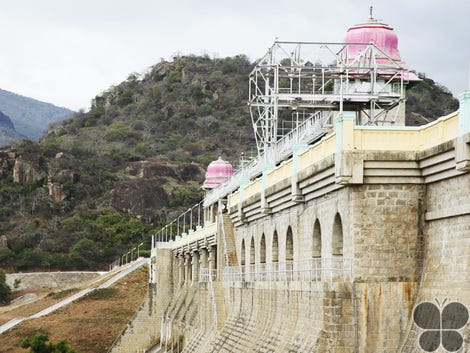
Sathanur Dam is formed by Sathanur reservoir, one of the major dams in Tamil Nadu. It is constructed across the . Sathanur Dam is constructed across the Thenpennai River also called as Pennaiyar River in Thandarampet taluk among Chennakesava Hills.  And if you want to cool off, there’s a swimming pool too. Do check out the Sathanur Crocodile Farm where you can see these large beasts at fairly close quarters. The fish conservation area or fish grotto, sadly, is quite badly maintained so chances are that you may be disappointed. The lake adjacent to the dam is very beautiful – a large expanse of gleaming water bordered by lush greenery.sathanur-dam-28129_800x600_original_watermark

saint-thyagaraja-s-samadhi

thiyagaraja
Thiruvaiyaru has been, and still is, home to many enlightened siddhas and ascetics. The 18th century saint-composer, Sri Thyagaraja, whose life was characterised by the ceaseless and divine music that flowed from him, was a resident of Thiruvaiyaru. His samadhi on the banks of the Cauvery is one of the reasons why people visit the place today.
Thiruvaiyaru has always been the home of many enlightened siddhas (saints) and ascetics. The 18th century saint-composer, Sri Thyagaraja, whose life was characterized by the continuous flow of divine music that he composed and sang, was a resident of Thiruvaiyaru.

Friday, 27 January 2017

The Rajiv Gandhi Memorial

The Rajiv Gandhi Memorial is a memorial to Indian prime minister Rajiv Gandhi at the site where he was assassinated at Sriperumbudur, India. 
rajiv-gandhi-memorial_800x600_slider_main
The Rajiv Gandhi Memorial is a memorial located in Sriperumbudur District of Tamilnadu state, to commemorate the death of former Indian Prime Minister, Rajiv Gandhi. The town was the place where Rajiv Gandhi was assassinated in a bomb blast in 1991. He was killed at this place by the LTTE using a human suicide bomber while campaigning for the local Loksabha candidate. Rajiv Gandhi is the former Prime Minister of India (1984 – 1989).
The bases of the pillars have a variety of quotes from Rajiv Gandhi etched on them and each pillar has distinct carvings of its own. On the southern part of the memorial, relief works have been fashioned on a grey granite stone wall which illustrates India’s civilization and its transformation from early time to contemporary times. ‘The Path of Light’ at the memorial portrays the final steps that were taken by Rajiv Gandhi.

Rajagopala Beerangi is massive cannon in Beerangi Medu

Rajagopala Beerangi is massive cannon in Beerangi Medu, Thanjavur which takes pride of place at the eastern gate of the Fort here. This amazing cannon, which was cast in 1620, speaks wonders of the metallurgical skills of the people of Thanjavur during that time. Apparently, they enlisted Danish technical know-how to cast the cannon. Cannon is a huge sized and qualitative display of workmanship at the top of the East Kothalam.
01th_cannon_heritag_909434f2b252812529
Rajagopalabeerangi is considered the largest cannon in India so it is worth a dekko. Interestingly, even after all these centuries, the cannon has not rusted.

Thursday, 26 January 2017

Pamban Bridge

Pamban Bridge is a railway bridge which connects the town of Rameswaram on Pamban Island to mainland India.
pamban-bridge_800x600_original_watermark
Pamban bridge, connecting Rameswaram island to the mainland. With 143 piers, spanning 2 km between the mainland and the island, it is the second longest sea bridge in India after the 2.3-km The bridge has been constructed at a considerable elevation in a wonderfully scenic area from where you get stunning views of the sea and the islands that are close by. Pamban Bridge is located in a region that is quite cyclone prone and the region has high wind speeds.

Namakkal Fort

Namakkal Fort is a historic fort present in Namakkal in Namakkal district in the South Indian state of Tamil Nadu.
namakkal-fort_800x600_original_watermark
Namakkal Fort is a must visit destination if you are in Namakkal because it’s like going back into a past era. Do check out the superb rock-cut temples dedicated to   Narasimhaswamy and Ranganathaswamy. The sculptures in the Narasimhamurthy temple have been carved out of living rocks. Another interesting spot is the ruins of a Vishnu temple devoted to Ethirili(Peerless) Perumal.

Tuesday, 24 January 2017

Mukkadal dam is built across the Vambaru River

Mukkadal dam is built across the Vambaru River in the state of Tamil Nadu in southern India, 10 km from town of Nagercoil. It is a scenic place, favored as a picnic location among local residents.
3
At the entrance gate, the road forks, one neat tar-topped stretch leading to the forest and, the other, a pebbled track ending in a flight of stone steps that led to the reservoir. The sheer beauty of the water body will leave you mesmerized. The water reflecting the soft rays of the sun and schools of fish visible in the clear water are sure to catch your attention.  Mukkadal dam
It’s time that authorities did more to promote this hidden jewel; as of now only locals visit this private paradise.

Mathur Aqueduct or Mathur Hanging Trough,

Mathur Aqueduct or Mathur Hanging Trough, is an aqueduct in southern India, in Kanyakumari District of Tamil Nadu state.mathur-hanging-bridge-28129_800x600_original_watermark
Mathoor Hanging Trough is an aqueduct and is also known as Mathoor Aqueduct. It crosses the River Parazhiyar. The trough canal (Pattanamakal Canal) transports water from one side of the hill to the other for irrigation requirements of the regions of Vilavancode and Kalkulam. Interestingly, this region has never faced drought after the bridge was built.

The Manora fort

The Manora fort is situated 65 km away from Thanjavur, Tamil Nadu, India. The fort was built by Maratha ruler Serfoji II in 1814–1815 to commemorate the successful advance of the British over Napoléon Bonaparte.
manora-fort-28229_800x600_original_watermark
Manora Fort, with its rather striking stone edifice and sylvan settings is most certainly worth visiting. With its tales of hidden treasures and secret passages, it makes it all the more attractive and mysterious! The fort is a great example of Maratha architecture.
Unfortunately, visitors are allowed to go only up two storeys within the fort because the authorities fear that thanks to extensive damage, there is a danger of the tower collapsing. But even climbing two floors gives you such awesome views of the cobalt seas and the lush coconut groves, that it’s worth the visit.

Monday, 23 January 2017

Kullursandai Reservoir or Kullursandai Dam

kullursandai-reservoir-7
Kullursandai Reservoir or Kullursandai Dam is used to store waters of Kowsiga mahanadi which is Arjuna River's tributary. This dam is located at Virudhunagar District about 7 kms from Virudhunagar. This Reservoir plays host to a variety of water birds and several migratory birds during winter months. To attract tourists, this Reservoir is being developed as a picnic spot with boating and other recreational facilities.
The best time to visit Kullursandai Reservoir is between August and February.
The Reservoir has a maximum depth of 31.7 Meters and can store upto 3.59 Million Cubic Meters of water. The height of the dam is 8 meters and the length of spillway is 143 meters.

Thursday, 19 January 2017

Kadamparai Dam, Valparai, Tamil Nadu.

Kadamparai Dam, Valparai, Tamil Nadu.
Special permission must be sought to visit this place. Hydro Electric plant at Kadamparai between Pollachi and Valparai is most worth seeing.
Many wild species are found frequently in this region. It’s speciality lies in the fact that it is carved out within a single rock, which gives an astonishing view.
The dam has an interesting recycling process — all through the day, the water from Kadamparai Dam is open to generate electricity, and during night, half the current stored is expended to recycle the water from Upper Aliyar to Kadamparai Dam.

Tuesday, 17 January 2017

Droog Fort, Coonoor, Tamil Nadu.

Droog Fort, Coonoor, Tamil Nadu.

Droog Fort, which is also called Bakasura Malai, is about 13 kms from the town and though it is in ruins, it is a magnificent vantage point. It is perched at a height of 6,000 feet above sea level and the view from here is simply stunning.

Today, only a wall remains of this military outpost. Tradition says that this fort was used by Tippu Sultan as an outpost. With such an impressive location that allowed the fort to command extraordinary views in all proclivities,its is not a thing to ponder upon as to how this was chosen as an outpost.In order to get to this site, you must travel through the Nonsuch Tea Estate. Droog Fort is also referred to as Bakasura Malai. This name links it to the legend of a local demon, Bakasura.

Monday, 16 January 2017

Dindigul Fort, Dindigul, Tamil Nadu.

Dindigul Fort, Dindigul, Tamil Nadu.
The Dindigul Fort or Dindigul Malai Kottai is a 17th-century hill fort, built by Madurai Nayak situated in the town of Dindigul in the state of Tamil Nadu in India. The fort was built by the Madurai Nayak king Muthu Krishnappa Nayak in 1605.
In the 18th century the fort passed on to Kingdom of Mysore (Mysore Wodeyar). During the reign of Hyder Ali and Tipu Sultan the fort was of strategic importance. In 1799 it went to the control of the British East India Company during the Polygar Wars.
Dindigul Fort is managed by the Archaeological Survey of India and is definitely a must visit destination if you are in the region. From the top you can enjoy some stunning views. The cannons, which are there at vantage points, can fire your imagination taking you back to a bygone era where you can picture fierce battles in your mind! The edifice underscores the resourcefulness of Indian kings in their military architecture.

Wednesday, 11 January 2017

Bhavanisagar Dam, Sathyamangalam, Tamil Nadu.

Bhavanisagar Dam or Lower Bhavani Dam, is located in Erode district, Tamil Nadu, India. The dam is constructed on the Bhavani river.It is one of the worlds largest Earthen Dam. The dam is situated some 16 km (9.9 mi) west of Sathyamangalam, is 35 km. The Bhavani River creates the Bhavanisagar Reservoir, which is in Bhavanisagar District in Tamil Nadu.

For a spot of activity, you could check out the small channel where you can indulge in some boating. The gleaming waters of the reservoir make for a picturesque and soothing sight.

Wednesday, 28 December 2016

Athangudi Palace, Athangudi, Tamil Nadu.

Athangudi Palace, Athangudi, Tamil Nadu.
Athangudi Palace, outside Karaikudi city, is a classic example of the traditional Chettinad architecture. Attangudi or Athangudi is a small village in Sivaganga District. The village has a population of about 2,000 inhabitants and is mainly famous for chettinad furniture, tiles and various foods. 

At the entrance is a pillared veranda or thinnai, meant for receiving visitors. Heavy ornate wooden doors lead to the main hall. Typically, the Palace extends to courtyards, dining halls etc. Italian marble, Burma teak, stained glass and a fusion of colour and ornate wrought iron, handmade tiles and woodwork, light up this house. The people of the area learned the art of tile-making and made a trademark of their own in Athangudi.

Tuesday, 27 December 2016

Amaravathi Dam, Udumalaipettai, Tamil Nadu.

The Amaravathi Dam is a dam constructed on the Amaravati River. It is located at Amaravathinagar, 25 kilometres (16 mi) south of Udumalpet on SH 17 in the Indira Gandhi Wildlife Sanctuary, Tirupur district in the Indian state of Tamil Nadu.

During the 1950s, the non-indigenous Tilapia fish was introduced here. As a result, Amaravathi Reservoir had the highest fish yield in Tamilnadu by the 1970s. Today, Tilapia accounts for a sizeable part of the fish caught in the reservoir. A fisherman can net over 20 kg of fish a day over here.
There are plenty of buses available from Coimbatore and Udumalpet to Amarabathi Dam.

Aliyar Dam, Pollachi, Tamil Nadu.

Aliyar Dam, Pollachi, Tamil Nadu.
Aliyar Reservoir is just 20 km from Pollachi in Coimbatore, Tamil Nadu and the Aliyar Dam stands tall and proud at the foot of Valparai.

Aliyar Dam receives water from Upper Aliyar Reservoir of Valparai through the hydroelectric power station in Navamali and the Parambikulam reservoir through a contour canal. Aliyar dam, built as a part of Parambikulam aliyar project (PAP), retains a large reservoir. The dam is around 2 kilometers in length.

Aliyar Dam’s scenic environs are what makes it so popular. Surrounded by mountains capped with mist and verdant slopes with the glistening silent reservoir, it makes for an ideal place to forget the hurly burly of city life.

Thursday, 22 December 2016

Valluvar Kottam, Chennai, Tamil Nadu.

Valluvar Kottam is a popular monument in Chennai, dedicated to the classical Tamil poet, philosopher, and saint, Thiruvalluvar. It is located at the intersection of the Kodambakkam High road and the Village road.

Thirukkural about 2000 years ago. Valluvar Kottam is at the busy intersection of the Kodambakkam High Road and the Village Road. Its massive auditorium is supposedly the biggest in Asia and can hold approximately 4000 people. 

Mettur Dam, Mettur, Tamil Nadu.

Photo credit by India WRIS.
The Mettur Dam is one of the largest dams in India. Built in 1934, it was constructed in a gorge, where the Kaveri River enters the plains.

The Mettur Dam has received public attention since the latter half of the 20th century, and especially in the mid-1990s, due to the Kaveri River water dispute between the States of Tamil Nadu and Karnataka.

Mettur Dam, which is in Salem District in Tamil Nadu, is scenically located where the River Cauvery enters the plains. The dam spans a length of 1700 meters (5,600 feet) and is 214 feet high. It creates the Stanley Reservoir and is a major power source for Tamil Nadu. It also provides irrigation to many areas including parts of Salem, Namakkal, Erode, Karur, Tiruchirapalli and Thanjavur districts. Mettur Dam is a picturesque place and is ideal for a relaxed picnic.